






Online stores
Product catalog, convenient shopping and more repeat orders.
I create mobile apps from idea and product logic through release in the stores. Thoughtful UX, clean code and attention to detail make the product useful, fast and genuinely convenient.
A mobile app is especially useful for businesses that depend on constant contact with customers, repeat sales, convenience and automation.
Product catalog, convenient shopping and more repeat orders.
Orders, statuses, routes and real-time notifications.
Fast product launch and hypothesis testing with a real audience.
Content, lessons, subscriptions and ongoing audience engagement.
Online booking, schedules and customer reminders.
Notifications, bonuses and customer retention through convenient contact.
We study the product, goals, audience and scenarios.
We fix the functions, roles, logic and requirements.
We build the screen structure and user flow.
We design a convenient interface and visual style.
We implement the client and server sides.
We test logic, speed, security and stability.
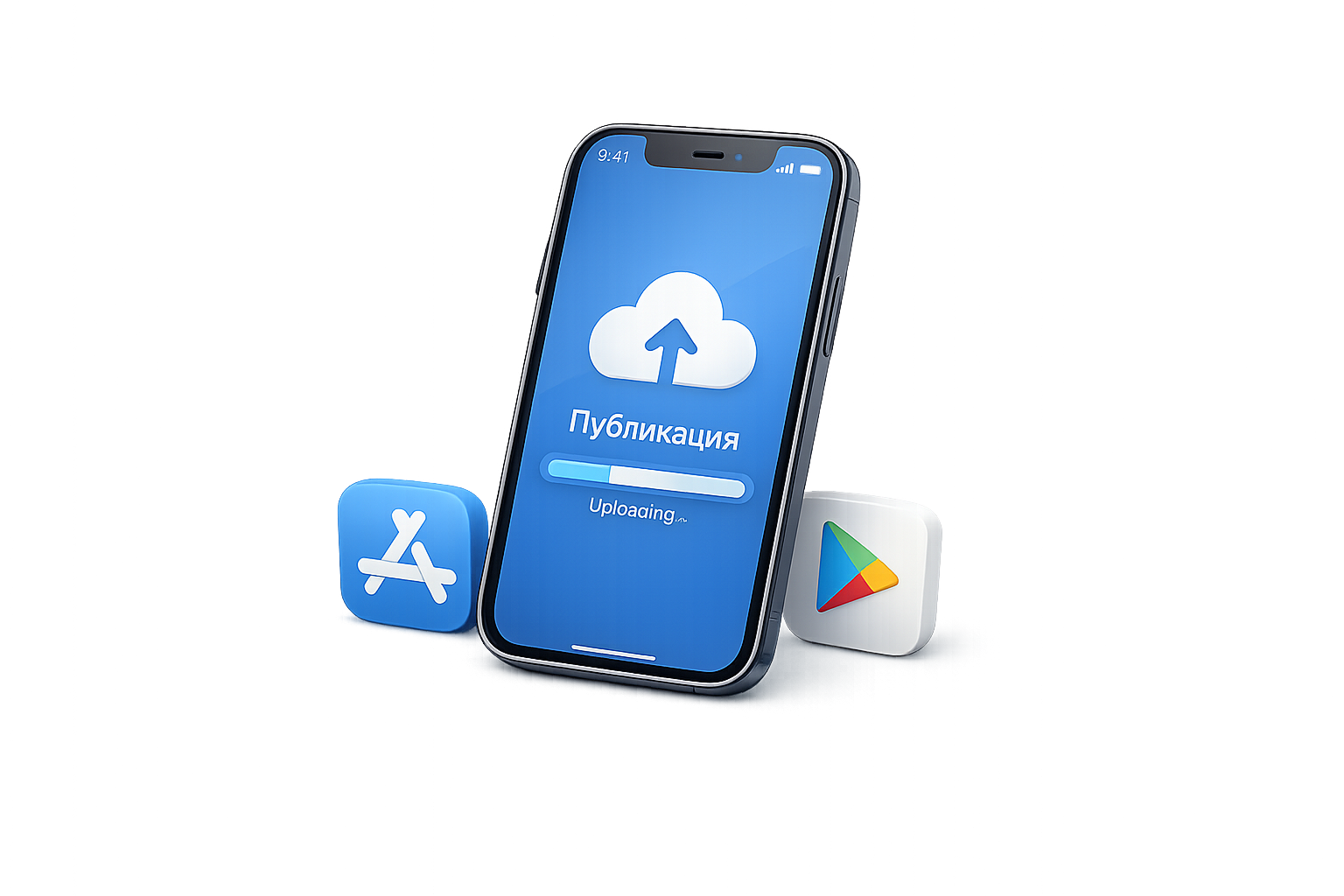
We prepare the release and publish it in the App Store and Google Play.
We update, improve and support the app after launch.
Full-cycle mobile app development — from idea and design to launch and support.
We create mobile apps from scratch around your business goals.
We improve functionality, add features and increase stability.
We design convenient modern interfaces focused on the user.
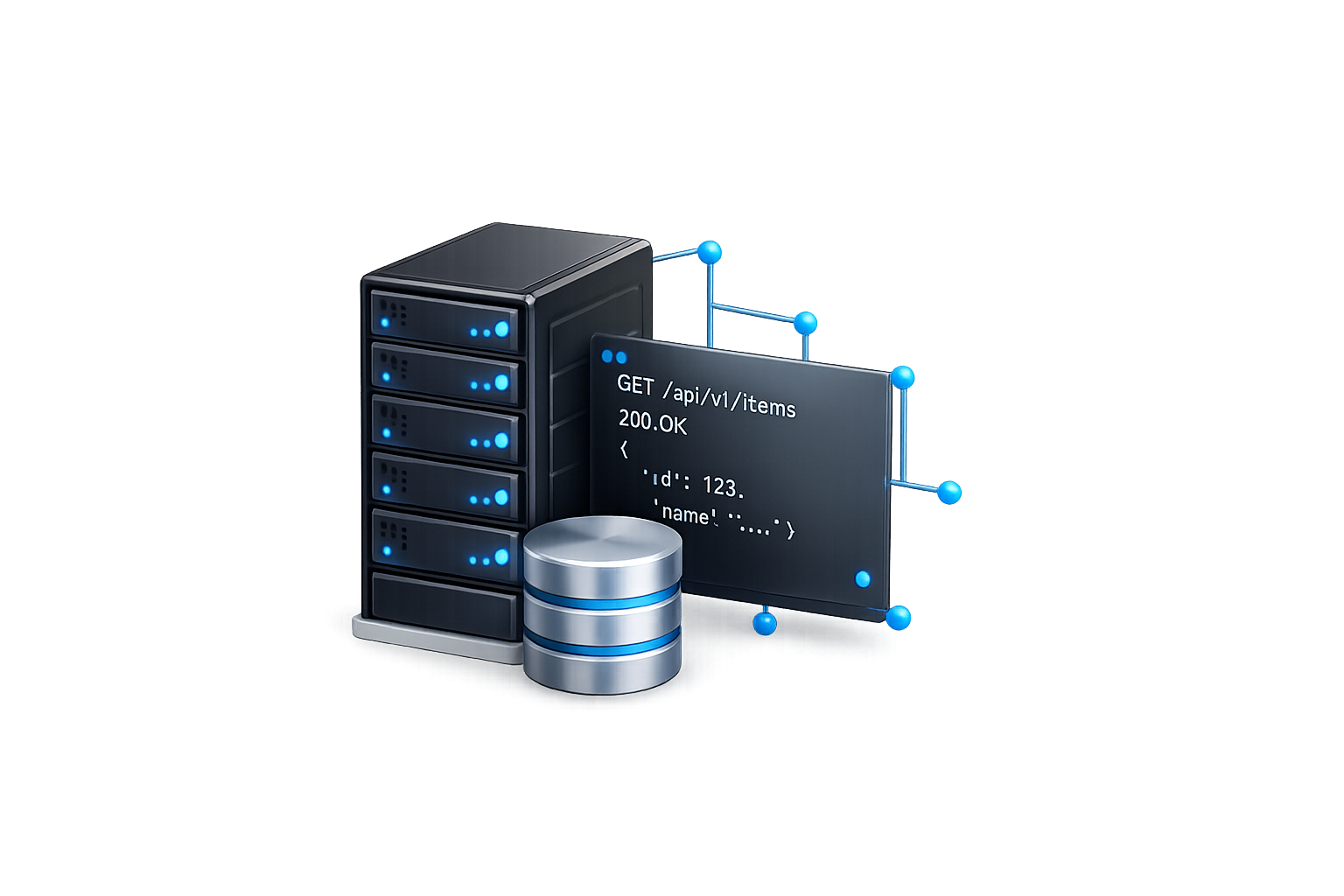
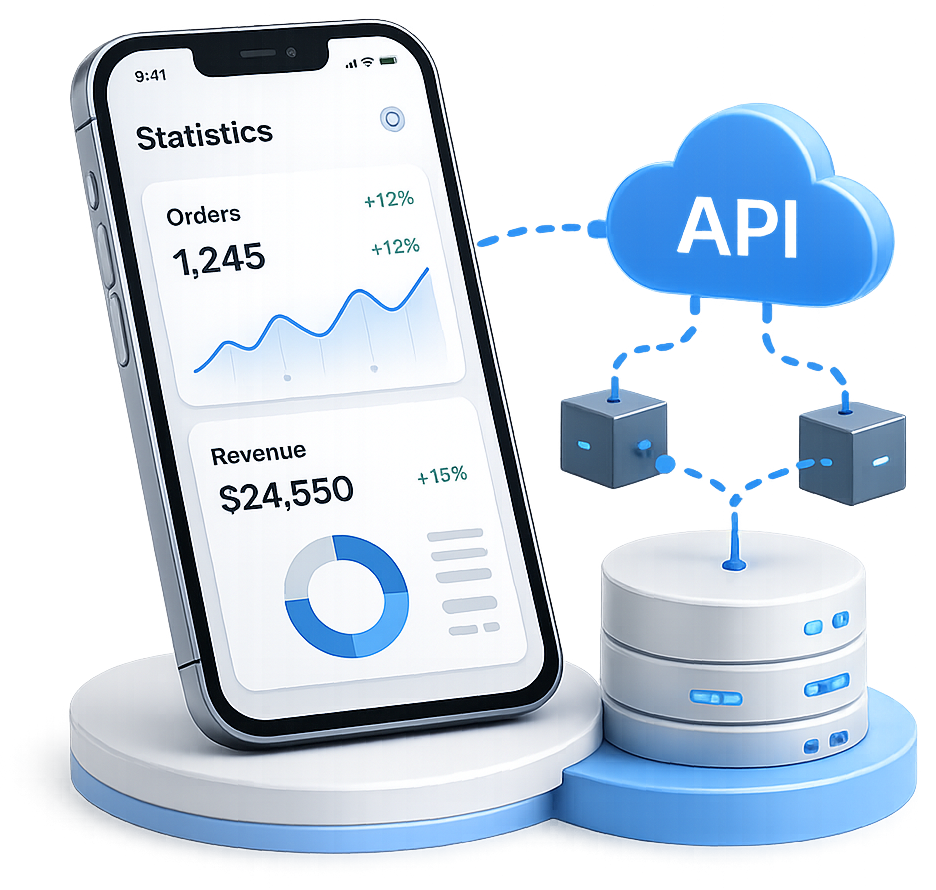
We build a reliable server, API and database for stable performance.
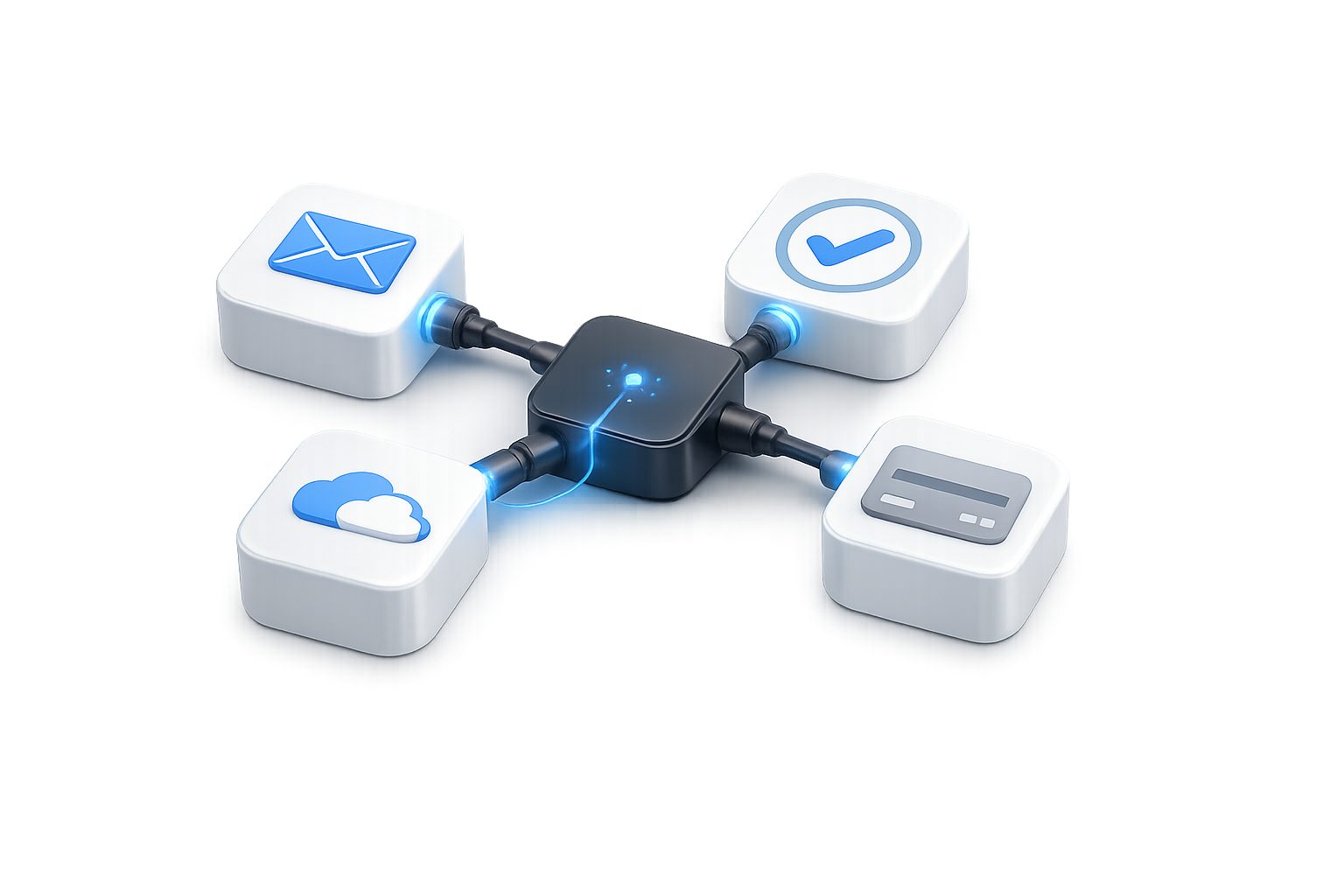
We connect third-party services, payment systems, CRMs, messengers and more.
We perform end-to-end testing to detect and fix issues.
We prepare and publish the app in the App Store, Google Play and other stores.
We keep the app stable, solve issues quickly and continue improving it.
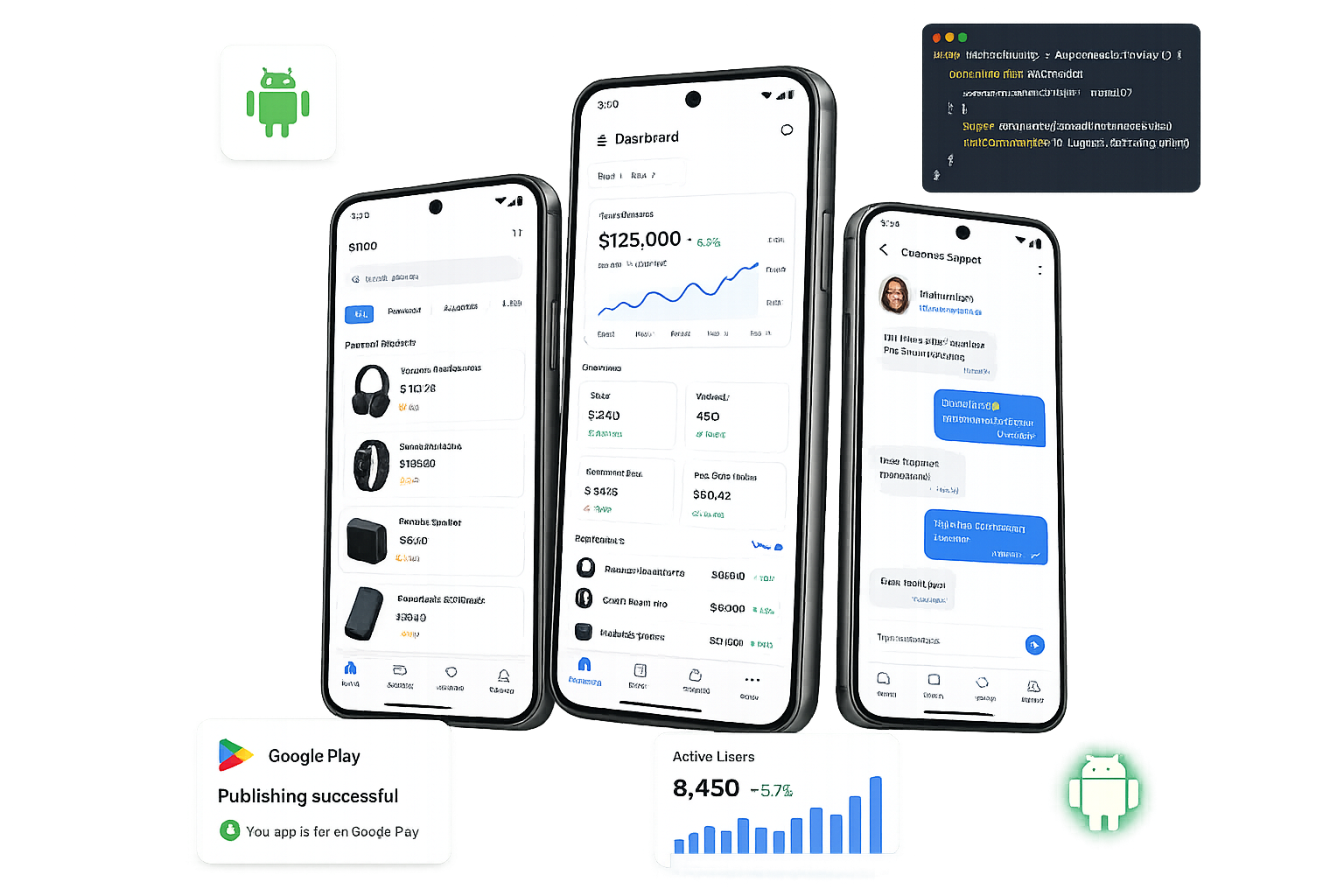
We build native Android apps for businesses and startups of any complexity — from idea and logic to design, development and Google Play publishing. Apps that are convenient, fast and ready to scale.
We build native iOS apps for businesses and startups. Your app for iPhone and iPad gets a convenient interface, stable performance and room to scale. We publish it in the App Store and support it at every stage.
Three core project formats — from a simple app to a scalable business service.
For an MVP, catalog, booking flow, promo app or a simple customer account.
For services, orders, customer accounts, booking and integrations.
For marketplaces, internal systems, complex logic and product scaling.
Live projects for work, study and everyday tasks. Each language version shows its own published app catalog.

Upload a dog photo or take a camera shot to identify likely breeds, mixed-breed percentages, visual clues, mood cues, and a practical breed card.

Upload a PDF and get an editable AI summary with key points, takeaways, and multiple output languages through a protected PHP backend.

Analyze pasted transactions, receipts, invoices, and notes with an AI bookkeeping assistant for categories, summaries, cash-flow checks, and cleanup steps.

Browse a free AI prompt catalog by model and category, then generate custom production-ready prompts with a protected server-side API.

Dog tick scanner app with photo checks, flea and tick guide, prevention tips, and safe next steps for dog owners.

Prepares Google Play icons, feature graphics, and screenshots right in the browser.

Interactive Las Vegas trip quiz with emoji-style steps, smart recommendations, and popup cards for tours, shows, attractions, and experiences.
Clean Chinese shoe size to US calculator with women, men, and kids charts, a fit quiz, and quick measuring tips.
Mobile-first Dubai activity guide with category filters, smart picks, and in-site popups for tours, attractions, food experiences, and desert escapes.

Fresh Los Angeles activity guide with category browsing, smart matching and in-site popup details for tours, day trips and local picks.

International clothing sizes XXS–3XL with a measurement calculator and comparison charts.

Quiz-first dog food finder with feeding, bowl-cost, and dog weight tools built around a local product base.

Breed-adjusted dog age calculator with human-years result, show-your-work steps, age curve, and conversion table.

Estimate your puppy’s adult weight, dog size category, height range, lifespan signal, and obesity-risk score in one bright pet-care calculator.
Emergency-style dog chocolate calculator with toxicity estimate, chocolate type scale, timeline, symptoms, and searchable brand checker.

Upload a tree photo or take a camera shot to get an editable AI identification report with likely species, visible clues, look-alikes, and safe next steps.

Estimate daily dog calories with RER, activity level, protein needs, safe treat allowance, and ideal-weight calorie guidance.

Upload a weed photo or take a camera shot to get an editable AI identification report with likely names, visual clues, look-alikes, and safe next steps.

Choose a focused AI assistant for emails, planning, study, content, travel, career tasks, coding help, and everyday questions.

Create professional recommendation letter drafts for jobs, college, scholarships, internships, and general references with a focused AI writing tool.
Create editable worksheets, quizzes, activities, homework sheets, and answer keys from a topic, grade level, and learning goal.

Estimate your dog’s due date from the mating date, see the 58–68 day labor window, and use pregnancy timeline, whelping kit, diary, and nutrition helpers.

Upload a rock or stone photo, or take a camera shot, to get an editable AI identification report with likely names, confidence, visible clues, and safety notes.

Continue stories, write endings, add plot twists, improve scenes, and create dialogue with a focused AI writing assistant.

Calculate daily raw dog food portions for BARF diets, including muscle meat, bone, liver, organs, vegetables, seeds, and fruits.

Estimate dry dog food portions in calories, cups, grams, and per-meal amounts using your dog weight and kibble label values.

Estimate your female dog’s next heat cycle, visible season window, fertile days, and cycle notes from the first day of her last heat.

Calculate a safe dog weight-loss calorie target and convert it into grams of the current food using target weight, RER, and kcal/kg.

Filter-first dog name generator with gender, category, first-letter search, meanings, and random name ideas for dog owners.

Quiz-first cat treat finder with favorites, a daily tracker, and built-in feeding tips.

English-only dog supplement finder with a smart quiz, dosage estimate, symptom checker, reminders, and product cards.

English-only dog food tool with a fast quiz, full feeding calculator, and breed weight guide with dog thumbnails.
Clients share their experience with the process, product quality and post-launch support.

Our biggest issue was repeat customers abandoning checkout on mobile. The new app made saved carts, reorders and delivery updates much easier to handle, and the whole purchase flow now feels far more direct.
The reorder flow ended up being the feature our customers use most.

We came in with a rough concept and a long list of ideas. Anton helped narrow it down to the features travelers actually need first, then built a release we could test with real guests before adding more.
The phased approach saved us from building a lot of things too early.

Drivers used to call dispatch constantly for route changes and proof-of-delivery questions. The mobile workflow now handles photos, notes and status updates in one place, which cut down a lot of back-and-forth.
It solved a very practical operations problem without making the app complicated.

Our staff was losing time rescheduling appointments through messages and phone calls. The app now lets customers manage their own bookings and gives the team a much cleaner daily schedule.
Clients figured it out immediately, which was exactly what we wanted.

We had several internal processes living in spreadsheets and chat threads. The app brought approvals, task updates and document access into one secure workspace while keeping permissions simple for different teams.
The permission system was handled especially well for our different departments.

Students were asking for an easier way to continue lessons from their phones. The app remembers progress, keeps downloaded materials organized and makes it simple to return to the exact point where they stopped.
The offline lesson experience turned out better than we expected.

We needed a lightweight marketplace MVP that could prove demand before a larger investment. The first version covered seller onboarding, listings and messaging without trying to copy every feature from established platforms.
The MVP stayed focused on validation instead of becoming an oversized project.

Our goal was to make loyalty feel useful rather than gimmicky. Customers can now track visits, receive personalized offers and book their usual services in a few taps, and adoption has been strong with regular clients.
The loyalty features feel integrated into the service instead of bolted on.

The first release exposed a few edge cases we had never considered during planning. They were reviewed quickly, fixes went out without drama, and we were able to keep onboarding new subscribers while improvements were being shipped.
The response after launch was just as reliable as during development.

Our field team needed access to job details even with unreliable connectivity. The app caches the essential information, syncs changes when a connection returns and gives managers a much clearer picture of completed work.
Offline behavior was not an afterthought, and that made a big difference for us.
Clear stages and controlled deadlines
Transparent, responsive and easy to follow
Help with fixes, improvements and product growth
Development for both mobile platforms
A basic start begins at $499. The final price depends on screen count, logic, integrations, account area, publishing needs and the overall complexity.
I work through the structure, user flows and interface, build the app, prepare it for launch and, when needed, help with the support page, privacy policy and the overall product packaging.
Yes. You can show references, competitors, a prototype or simply describe the task in words. I will shape a clear structure and suggest a practical implementation format.
Yes, every tier includes a post-launch technical warranty. It helps close minor bugs calmly and bring the app to a stable working state.
·
·

























 Trusted by clients